I’ve been called tender-hearted by the well-meaning and teased by the mean whenever I agonize over a dead animal in or on the side of the road. Yes, I’m THAT person. I stop so Mama Goose and her goslings can cross the road. I swerve to miss squirrels (if there is no traffic). I grieve the sight of someone’s tragic dog or cat and worry whether a dead raccoon or possum has left behind a family in its nest. Likewise, I can’t watch animal documentaries or see clear-cutting and deforestation without being swamped by sadness.
Yes, I understand biological cycle of life. But, I believe that the cycle of life that we accept in a world fractured by sin and tectonic collision between what God intended and what humans purposed, does not resemble God’s original plan—the context in which he gave us stewardship of creation.
God calls us to be a foretaste of heaven—to create the best facsimile of God’s kingdom here on earth, and to live into that vision now, without delay (Matthew 6:10; Ephesians 1:14: Romans 8:23). Our relationships with God, others, and creation should resemble that which God promises to one day redeem. God promises to restore not just humankind to himself, but all of creation (Revelation 21:1-5). To me, this means that it is critical to care for the health of the natural world in the here and now.
John Wesley, the 18th Century Anglican priest who influenced the Methodist movement, strongly and beautifully argued for this Kingdom value of creation by drawing on Revelation 21:1-5 and 2 Peter 3:7 in his sermon The New Creation:
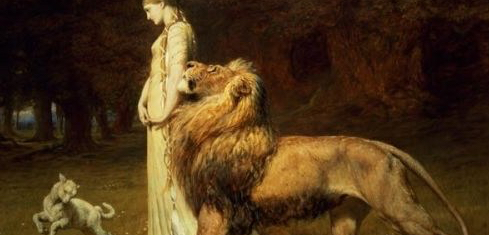
“In the living part of the creation were seen the most deplorable effects of Adam’s apostasy….But it shall not always be so. He that sitteth upon the throne will soon change the face of all things, and give a demonstrative proof to all his creatures that “his mercy is over all his works.” The horrid state of things which at present obtains, will soon be at an end. On the new earth, no creature will kill, or hurt, or give pain to any other. The scorpion will have no poisonous sting; the adder, no venomous teeth. The lion will have no claws to tear the lamb; no teeth to grind his flesh and bones. Nay, no creature, no beast, bird, or fish, will have any inclination to hurt any other; for cruelty will be far away, and savageness and fierceness be forgotten.”
I embrace the Social Principles of The United Methodist Church, which states the following regarding the natural world:
“All creation is the Lord’s, and we are responsible for the ways in which we use and abuse it. Water, air, soil, minerals, energy resources, plants, animal life, and space are to be valued and conserved because they are God’s creation and not solely because they are useful to human beings. God has granted us stewardship of creation. We should meet these stewardship duties through acts of loving care and respect….Therefore, let us recognize the responsibility of the church and its members to place a high priority on changes in economic, political, social, and technological lifestyles to support a more ecologically equitable and sustainable world leading to a higher quality of life for all of God’s creation.”
The label “tree hugger” has long been used as a pejorative by people supporting development and enslavement of creation for capital gain. You may label me that, but I prefer—and believe it’s more biblically correct—to be called a “creation hugger.” I look to the day when drought-browned pines will instead burst with scented green, when depleted roots will instead reach deep into infinitely robust soil, when the haunted eyes and anguished cries of animals will instead radiate with peace and sing glory to God.

When that day comes, the twisted values that corrupt the wonder of creation will be roadkill along the path to God’s new heaven and earth.
More than musings…What to do?
- Pray that God would break your heart over an environment issue that breaks his heart.
- Engage your mind and reason to discover truths about care of creation, environment and climate change, and not settle for repeating what you have heard from others.
- Look for planning commission and rezoning hearings for new developments and attend one.
- Volunteer at a nature park, beach cleanup, or river keeping.
- Plant fruit trees and berry shrubs and let the animals take freely
- If you live in Conway, the Waccamaw River Conference is Saturday, February 10th at 1pm at the Horry County Museum.
- Explore Christian environmental justice organizations and events:
 The Runnin' Rev